
 Post by
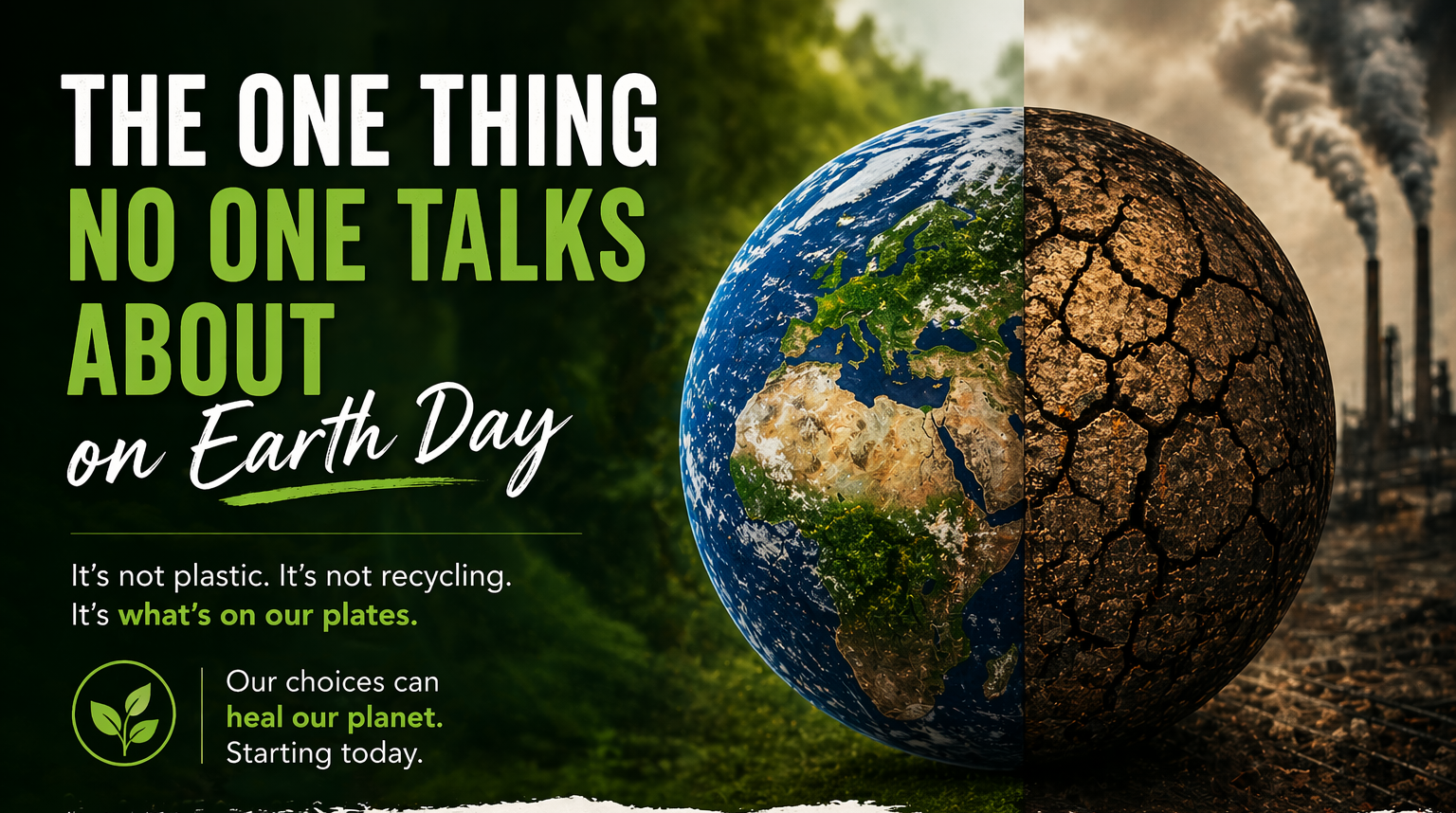
 🌍 Earth Day Isn’t Just About Plastic — It’s About What’s On Your Plate
Every Earth Day, I used to think I was doing my part.
♻️ I recycled.
🛍️ I avoided plastic bags.
💧I tried to be “more conscious.”
But a few years ago… I came across something that stopped me.
Not a headline.
Not an opinion.
A simple question:
👉 How much of our Earth is actually being used… and for what?
And honestly—I didn’t know the answer.
Most people don’t.
🌎 What I Realized About Our Planet Changed Everything
We often imagine Earth as vast, abundant, and full of nature.
But when you break it down, the reality is very different.
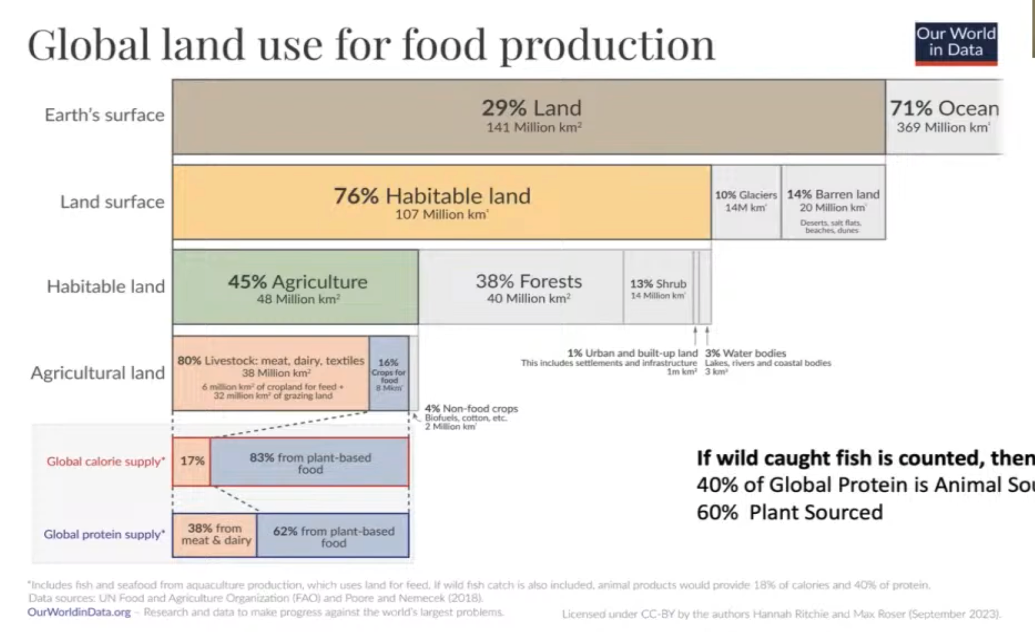
- Only 29% of Earth is land
- Of that, only ~76% is habitable (not ice, desert, or mountains)
Now here’s the part that hit me the hardest:
👉 Nearly HALF of all habitable land is used for agriculture
But it doesn’t stop there…
👉 Of that agricultural land:
- ~80% is used for livestock (grazing + growing feed)
- ~16% is used to grow food directly for humans
- The rest is for things like biofuels and materials
I had to pause.
Because this means…
👉 The majority of the land we’ve taken from nature…
…is not to feed humans directly.
🌳 So Where Did Nature Go?
We often talk about protecting forests.
But we rarely ask:
👉 Where did they go in the first place?
- We’ve cut down ~50% of the world’s forests
- 75% of land ecosystems have been altered by humans
- Wetlands drained. Grasslands transformed. Habitats erased.
And the leading cause?
👉 Animal agriculture
Not urban development.
Not roads.
Not even cities.
Food production for animals.
That was a hard truth for me to sit with.
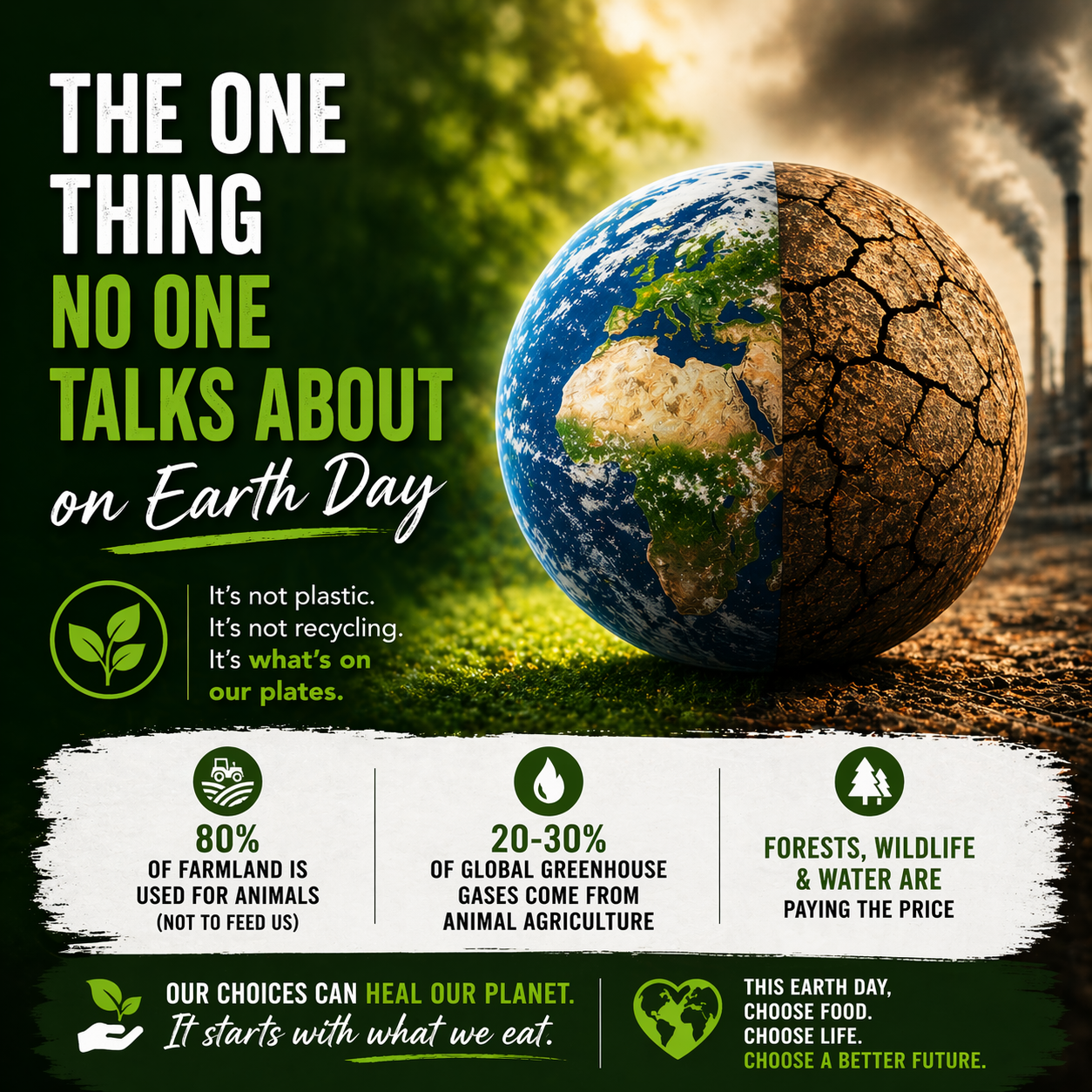
👉 ~80% of ALL agricultural land is used for livestock (animals)
👉 Yet it provides only:
- ~17% of global calories
- ~38% of global protein
We are using most of our land… for the least efficient food system.
⚖️ The Imbalance We Don’t See
Another realization that shook me:
If you look at all mammals on Earth today—
- Humans + livestock = ~96%
- Wild animals = ~4%
Let that land.
We haven’t just changed the planet.
👉 We’ve replaced the natural world with livestock.
And most of us never see it…
Because it’s hidden behind supply chains, farms, and systems we don’t question.
🧠 The Inefficiency No One Talks About
Then I learned something else:
Even the way we produce food… is incredibly inefficient.
We’ve been told animal protein is necessary.
But no one explains the feed conversion problem:
To produce:
- 1 kg of chicken → requires 3–6 kg of plant feed
- 1 kg of pork → 6–8 kg
- 1 kg of beef → 10–18+ kg
👉 That means 65–90% of nutrients are lost
We grow plants…
Feed them to animals…
Then eat a fraction back.
Meanwhile:
👉 ~40–50% of global crops are fed to animals — not humans
🌊 And It’s Not Just Land…
The impact doesn’t stop there.
- 3/4 of global freshwater is used for animal agriculture
- Animal waste pollutes rivers, lakes, and oceans
- Entire ecosystems are collapsing
🌳 What It’s Costing Us
To sustain this system, we have:
- Cut down ~50% of the world’s forests
- Altered 75% of land ecosystems
- Changed 2/3 of oceans
- Used 3/4 of freshwater for agriculture
💧 Water, Pollution & Dead Zones
Animal agriculture doesn’t just use more water — it contaminates it.
- Massive waste lagoons from factory farms
- Runoff into rivers, lakes, oceans
- Fertilizers + manure → dead zones in oceans
- Bacteria + parasites → human disease
This is why many water systems are literally dying.
And then there’s climate change.
🌡️ The Missing Link in Climate Conversations
Animal agriculture contributes roughly:
👉 20–30% of global greenhouse gas emissions
And it’s not just CO₂.
- Methane (from cows) → 30x more potent than CO₂
- Nitrous oxide (from waste) → even more powerful
👉 1/3 of global methane comes from animal agriculture
Even if we reduce fossil fuels…
👉 We cannot meet climate targets without changing how we eat.
And I remember thinking:
👉 Why isn’t this talked about more?
🌱 The Shift That Gave Me Hope
After all of this, I could have felt overwhelmed.
But instead, I felt something else:
Clarity.
Because the solution wasn’t complicated.
Now here’s the hopeful part.
If we simply shifted toward plant-based eating:
- We could use a fraction of the land
- Feed more people
- Reduce deforestation
- Restore ecosystems
- Reverse biodiversity loss
Imagine this:
Instead of using massive land to grow feed → feed animals → feed humans…
👉 We grow food directly for humans
That alone could:
- Help feed 10 billion people
- Free land for reforestation
- Pull carbon out of the atmosphere
❤️ This Isn’t About Perfection. It’s About Direction.
It’s about awareness.
Because once you see this…
👉 you can’t unsee it.
And the question becomes:
What small step am I willing to take?
You don’t have to change everything overnight.
But every step matters:
- One plant-based meal a day
- Swapping animal protein for lentils, beans, tofu
- Becoming aware of your choices
❤️ What This Means for You (and Me)
🌍 This Earth Day, I’m Asking You What I Asked Myself
👉 How much of our Earth is being used… and for what?
👉 And is that the world we want to keep creating?
Because the most powerful change we can make…
Is something we do every single day.
What we choose to eat.
🌍 This Earth Day, instead of asking:
“What can I recycle?”
Ask:
👉 “What can I replace on my plate?”
If you want guidance on how to do plant-based eating without feeling restricted or overwhelmed, I’d love to support you.
You can book a free 10 min consultation with Dr. Shobha Rayapudi.
Because healing your body…
and healing the planet…
👉 can start with the same decision.
🌱 The Most Powerful Shift We Can Make



0 comment
LEAVE A REPLY HERE
Your email address will not be published.