
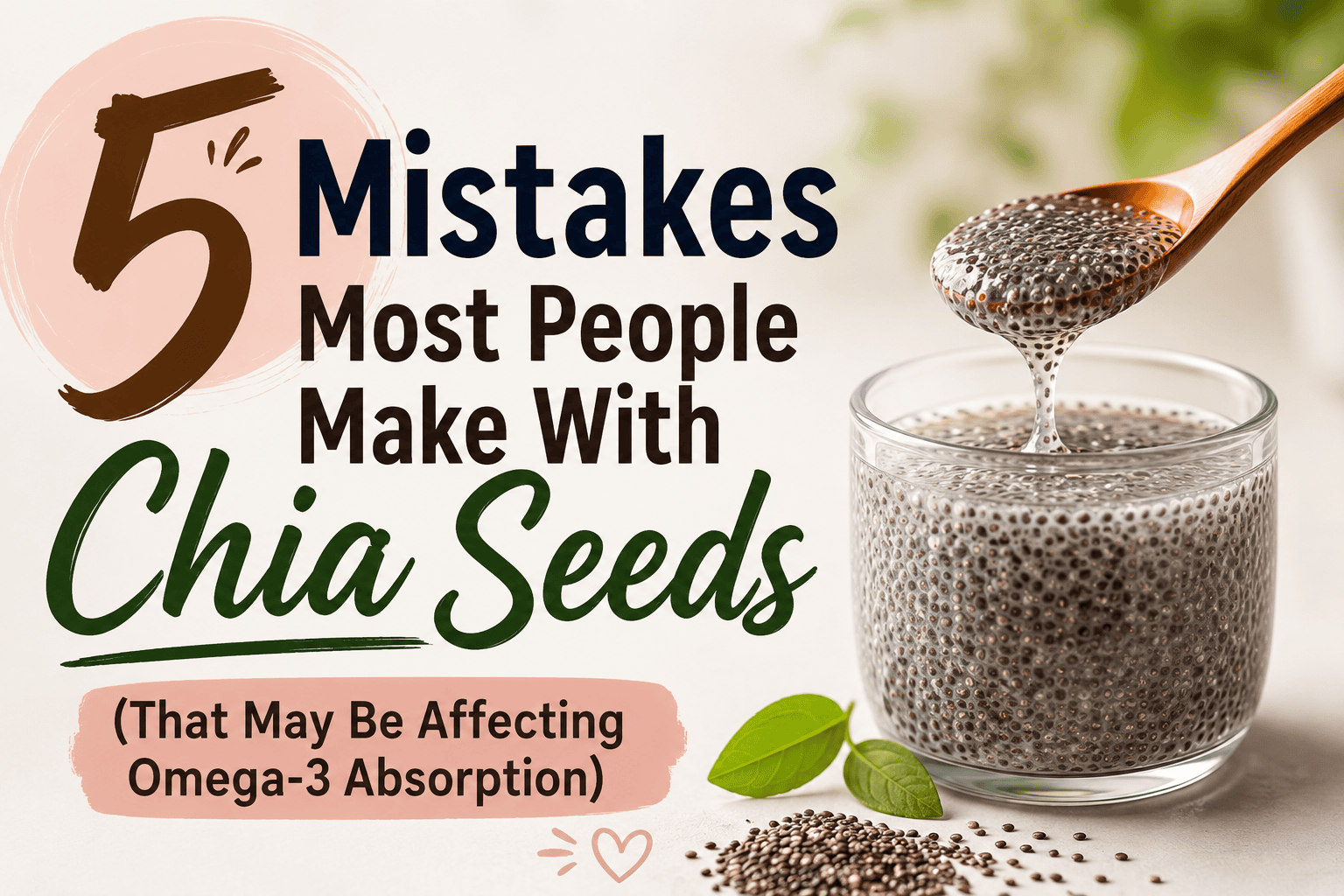
5 Chia Seed Habits That May Be Hurting Your Gut and Omega-3 Absorption
Recently, I shared a blog on 5 powerful things you can do to protect your cognitive health.
One of the points I discussed was omega-3 fats — especially the concern that many plant-based eaters may not be getting enough EPA and DHA, even when they regularly consume foods rich in ALA omega-3s like chia seeds, flaxseeds, and walnuts.
And this led me to revisit something I kept noticing repeatedly.
Many health-conscious people were eating chia seeds every single day:
- In smoothies
- Oatmeal
- Overnight puddings
- Yogurt bowls
- Wellness drinks
Yet their omega-3 index still remained surprisingly low.
That made me dig deeper.
And what I found was fascinating.
The issue often wasn’t whether they were eating chia seeds.
It was how the chia seeds were being soaked, combined, timed, and stored.
Because chia seeds truly are one of the most nutrient-dense foods you can add to your diet.
They are one of the richest plant sources of:
- ALA omega-3 fats
- Fiber
- Calcium
- Iron
- Antioxidants
Gram for gram, chia seeds are exceptionally nutrient dense.
But despite all these benefits, many people may not be fully accessing what chia seeds are capable of offering.
You cannot simply toss chia seeds into whatever you are eating and assume your body will efficiently absorb everything inside them.
The way chia interacts with water, dairy, acidity, sugar, digestion, and storage changes how your body experiences those seeds.
And once I understood the science behind it, so many digestive complaints people blamed on chia suddenly started making sense.
So today, I want to walk you through:
- The 5 most common mistakes people make with chia seeds
- What is happening inside the body with each one
- And the simple changes that can help you get far more from these tiny seeds
First, Let’s Understand Why Chia Seeds Work So Differently
The outer layer of every chia seed contains a special soluble fiber called mucilage.
This is the substance responsible for the gel-like texture chia develops when soaked.
But this gel is much more than texture.
When the mucilage hydrates fully, it:
- Slows glucose absorption into the bloodstream
- Forms a soothing coating over the intestinal lining
- Feeds beneficial gut bacteria
- Helps improve fullness and satiety
- Supports better nutrient and omega-3 availability
But here’s the important part most people don’t realize:
This process takes time.
In the first few minutes, only the surface of the seed begins to absorb water.
The gel expands gradually over the next 20–30 minutes.
But complete hydration — including improved phytic acid breakdown and better omega-3 accessibility — can take 2–3 hours.
When chia is consumed too quickly after soaking, the seeds may still remain dry internally.
And instead of supporting digestion, they may continue pulling water inside the digestive tract itself, which can contribute to bloating and heaviness.
Mistake #1: Sprinkling Dry Chia Seeds on Oatmeal, Smoothie Bowls, or Yogurt
This is probably the most common mistake among health-conscious eaters.
A sprinkle of chia on top of Oatmeal or smoothie bowls looks nourishing.
But biologically, it may not be doing what people think.
When dry chia seeds are consumed immediately:
- The gel has not fully formed
- Omega-3 fats remain trapped inside the seed structure
- Phytic acid breakdown has barely started
- The gut-protective mucilage is incomplete
So although the chia is present in the meal, your body may not be accessing many of its benefits efficiently.
Why Yogurt + Dry Chia Can Feel Heavy
Yogurt, including plant-based yogurt, is naturally acidic.
But chia gel forms best in a more neutral environment.
When dry chia lands directly in yogurt:
- The acidic environment weakens gel development
- Milk proteins and fats coat the seed surface early
- Water absorption becomes uneven
- Some seeds stay partially dry inside
This uneven hydration may contribute to the bloating or heaviness many people experience afterward.
A Better Approach
Soak chia separately in plain room-temperature water for at least 2 hours first.
Only then add it to yogurt, smoothies, oatmeal, or desserts.
Mistake #2: Not Soaking Chia Seeds Long Enough
This mistake affects more than digestion.
It may also affect mineral availability.
Chia seeds naturally contain phytic acid, a compound found in many seeds and grains.
Phytic acid can bind to minerals like:
- Iron
- Zinc
- Calcium
…and reduce how much your body absorbs.
This becomes especially important in populations already struggling with iron deficiency.
When chia seeds soak long enough, an enzyme naturally present inside the seed called phytase becomes activated.
Phytase helps break down phytic acid and improves mineral accessibility.
A Simple Test Most People Don’t Know
Before consuming soaked chia:
- Press a seed gently between your fingers
- If you feel resistance or firmness, it is not fully hydrated yet
Properly soaked chia should feel completely soft with smooth, even gel surrounding every seed.
Mistake #3: Soaking Chia Directly in Milk or Sweetened Liquids
Overnight chia puddings have become incredibly popular.
But soaking chia directly in:
- Milk
- Almond milk
- Oat milk
- Sweetened yogurt
- Maple Syrup
- Dates
…creates two important problems.
Problem #1: Milk Changes Hydration Dynamics
The fats and proteins in milk coat the outer surface of the seed early.
This interferes with even water penetration.
So even when the chia looks soaked, hydration inside may still be incomplete.
Problem #2: Sugar + Weak Gel Can Increase Gut Fermentation
When sweeteners are added during soaking, more sugar may reach the large intestine quickly because the gel structure is not fully developed.
This may encourage excessive fermentation by opportunistic bacteria and contribute to:
- Gas
- Bloating
- Cramping
- Loose motions
- Gut irritation
Over time, this may affect the intestinal barrier and increase low-grade inflammation.
A Better Approach
Always hydrate chia in plain water first.
Then later add:
- Milk
- Yogurt
- Fruits
- Maple Syrup or any other liquid sweetener
- Dates
- Berries
Mistake #4: Using Too Little Water — Especially on an Empty Stomach
Most people underestimate how much water chia actually requires.
One tablespoon of chia seeds needs approximately:
150–180 ml of water
Without enough water:
- Seeds clump together
- Hydration becomes uneven
- Some remain dry inside
This creates heaviness and digestive discomfort.
Why Timing Also Matters
Many people drink chia water first thing in the morning on an empty stomach.
But after an overnight fast:
- Digestive enzymes are lower
- Stomach acid is reduced
- The digestive system is still relatively inactive
A concentrated fiber load entering the gut at this time may sit longer than expected and contribute to fermentation and bloating.
A Better Approach
Instead:
- Drink plain water first
- Eat something light like fruit
- Then consume soaked chia with or after breakfast
Mistake #5: Keeping Soaked Chia for Too Many Days
Many people prepare large batches of chia for the entire week.
But soaked chia changes over time.
Inside dry chia seeds, omega-3 fats are naturally protected.
Once soaked, that protective barrier opens and the fats become exposed to oxygen.
Gradually, oxidation begins.
And oxidized fats may not deliver the same anti-inflammatory benefits you were originally seeking.
Refrigeration slows this process — but does not completely stop it.
Signs Your Soaked Chia Has Gone Too Far
Discard it if you notice:
- Sour smell
- Fermented odor
- Excessive sliminess
- Yellowish or brown discoloration
A Better Approach
- Prepare small batches only
- Store in sealed glass containers
- Refrigerate immediately
- Consume within 48 hours
The Best Way to Prepare Chia Seeds
Step 1
Take 1 tablespoon chia seeds.
Step 2
Rinse briefly under clean water.
Step 3
Add to:
- 150–180 ml plain room-temperature water
Not hot.
Not ice cold.
Step 4
Leave for a minimum of 2 hours.
Step 5
Check softness.
Every seed should feel completely soft with no dry center.
Step 6
Now add:
- Oats
- Milk
- Yogurt
- Fruit
- Maple Syrup
- Berries
- Oatmeal
- Smoothies
Step 7
Store refrigerated and consume within 48 hours.
Three Simple Rules to Remember
- Soak in plain water first
- Give it enough time to hydrate fully
- Avoid storing soaked chia for more than 48 hours
Common Questions that people have
How about grinding the chia seeds and adding them to Oats that have been soaked in Soy milk overnight?Is it better to soak whole chia seeds separately before adding to overnight oats?
Yes — grinding chia seeds may improve access to some of the nutrients inside the seed, including ALA omega-3 fats, because the hard outer structure is physically broken down before digestion.
But there are a few important nuances here.
Grinding Chia vs Soaking Whole Chia
Whole chia seeds rely heavily on:
- hydration
- gel formation
- digestive breakdown
If they are not soaked adequately, some seeds may pass partially intact through the digestive tract.
Grinding changes this because the seed structure is already disrupted.
So theoretically:
- omega-3 availability may improve
- mineral access may improve
- digestion may become easier for some people
This is very similar to flaxseeds, where grinding dramatically improves absorption.
However, chia behaves differently from flax because chia’s mucilage gel itself provides many of the gut-related benefits.
So when chia is ground and immediately added to oatmeal:
- you may improve access to fats inside the seed
- but you lose some of the slow gel-forming effect that whole hydrated chia provides
But There’s Another Important Concern: Oxidation
Once chia is ground, the omega-3 fats become much more exposed to:
- oxygen
- heat
- light
ALA fats are delicate.
So if ground chia:
- sits for long periods
- is exposed to heat repeatedly
- or is stored improperly
…the fats can oxidize more quickly.
That’s why freshly ground chia is likely better than pre-ground chia stored for weeks.
What About Adding Ground Chia to Hot Oatmeal?
This is where nuance matters.
Moderate heat from freshly cooked oatmeal probably does not instantly “destroy” omega-3s.
But prolonged exposure to high heat may gradually increase oxidation of delicate fats.
A practical middle-ground approach is:
- cook the oatmeal first
- let it cool slightly
- then stir in freshly ground chia
That may help preserve more of the omega-3 integrity.
Any advantages to grinding chia seeds before soaking in water?
Yes — there may be some advantages to grinding chia seeds before soaking, but there are also trade-offs people should understand.
Potential Advantages of Grinding Before Soaking
1. Better Access to Omega-3 Fats
Grinding breaks open the outer seed structure.
This may allow:
- easier access to ALA omega-3 fats
- improved digestion of the fats
- potentially better absorption compared to whole seeds that remain partially intact
This is especially relevant for people with weaker digestion or rapid gut transit.
2. Faster Hydration
Ground chia absorbs water much more quickly than whole seeds.
Instead of waiting 2–3 hours for complete hydration, ground chia may hydrate more evenly and rapidly.
This may reduce the issue of:
- dry seed centers
- uneven swelling
- partial hydration
3. Improved Mineral Accessibility
Grinding exposes more surface area.
Combined with soaking, this may help:
- phytase enzymes work more efficiently
- phytic acid break down more effectively
- minerals become more available
4. Easier Digestion for Some People
Some individuals experience:
- bloating
- heaviness
- visible intact chia seeds in stool
Grinding may reduce this because the digestive system no longer has to break through the intact outer structure.
But There Are Important Trade-Offs
1. Omega-3 Oxidation Happens Faster
This is the biggest downside.
Once chia is ground:
- oxygen exposure increases dramatically
- delicate ALA fats become more vulnerable
- oxidation can happen much faster
Especially if:
- pre-ground chia sits for days
- it’s exposed to heat/light
- it’s stored improperly
This is why freshly ground chia is probably preferable to buying large bags of pre-ground chia.
2. You May Lose Some Gel Structure Benefits
Whole soaked chia forms a thicker mucilage gel.
That gel contributes to:
- satiety
- blood sugar slowing
- gut lining protection
- prebiotic effects
Ground chia still thickens, but the gel structure may not behave exactly the same way.
So What’s Probably the Best Approach?
A balanced middle-ground may be:
Option 1 — For Gut Benefits
Use:
- whole chia
- soaked properly in water for 2–3 hours
Option 2 — For Omega-3 Accessibility
Use:
- freshly ground chia
- soaked briefly
- consumed relatively quickly
Final Thoughts
Chia seeds truly are one of the most remarkable foods we can include in a plant-forward diet.
But sometimes the difference between nourishment and discomfort is not the food itself — it’s the way the body receives it.
Small details matter:
- Hydration
- Timing
- Storage
- Food combinations
- Grinding
And sometimes improving nutrient absorption is not about eating more healthy foods…
…but learning how to work with them more intelligently.
In Health,
Dr.Shobha Rayapudi
Tags:
Search Blogs
