
 Post by
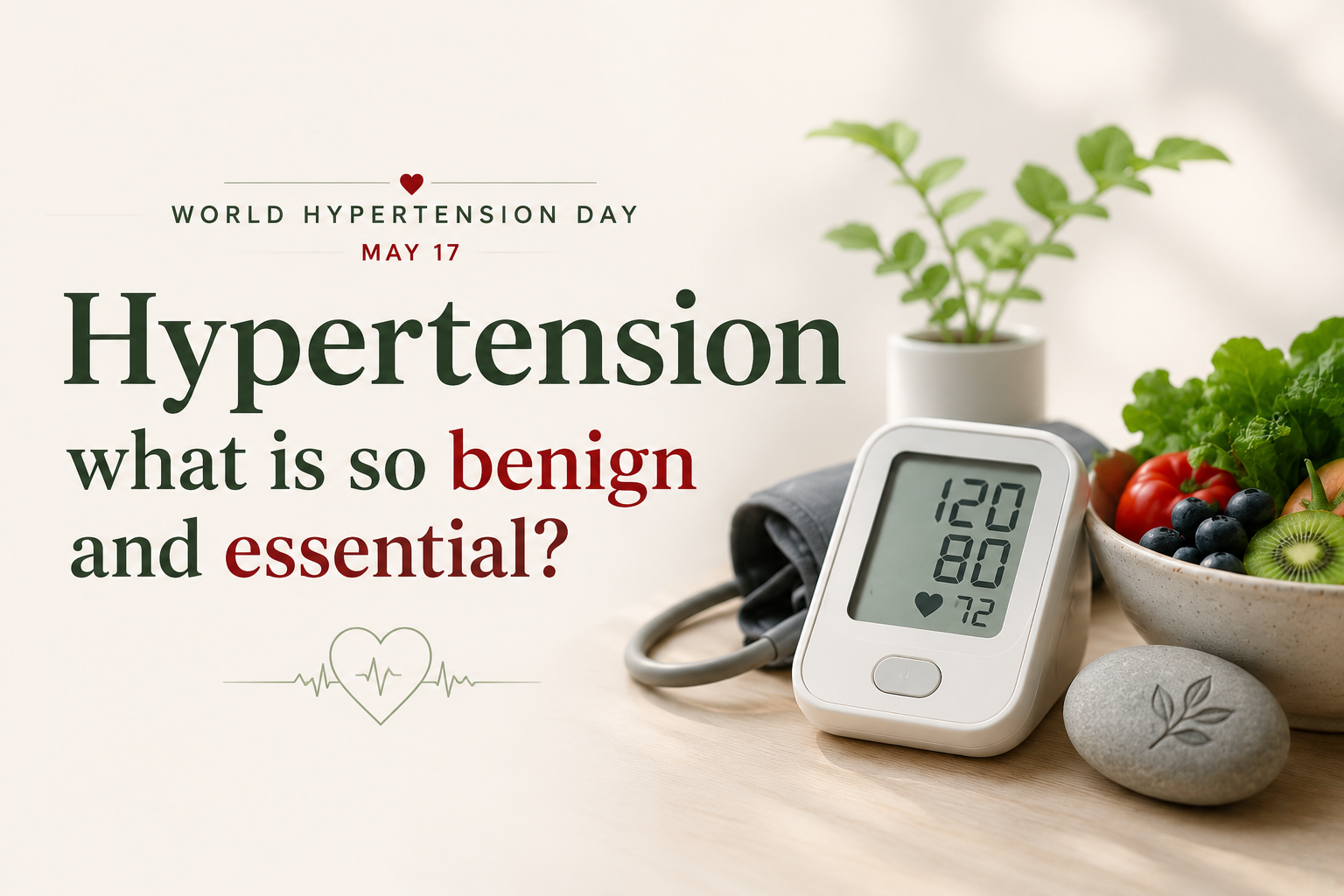
 Hypertension — What Is So Benign and Essential?
May 17th is World Hypertension Day — a day dedicated to raising awareness about one of the most dangerous yet misunderstood conditions affecting modern society: high blood pressure.
And perhaps the greatest tragedy of hypertension is this:
Most people do not take it seriously until something irreversible happens.
A stroke.
A heart attack.
Loss of memory.
Kidney failure.
Paralysis.
Sudden cardiac death.
By then, years of silent damage may have already occurred.
The Most Dangerous “Symptom” of High Blood Pressure…
…is there really are no symptoms.
You can’t feel your arteries narrowing or clogging up.
In fact, if your doctor didn’t hound you about your “numbers”…
You’d probably never worry about your high blood pressure… until it’s too late.
If you have high blood pressure (hypertension), it’s your body telling you something is wrong.
It is the result of a lifestyle that also causes cancer, heart attacks and strokes. If you have high blood pressure, it is demonstrative of you living a lifestyle that also causes other diseases that will kill you prematurely.
Most of us are unaware of the fact that hypertension is primarily a dietary disease, and most of us don’t see high blood pressure as a major issue as long as we do not have a stroke or paralysis.
But high blood pressure is not benign.
It is the number one risk factor for death in the world.
Nearly one in two adults in the United States and Canada have high blood pressure. One in three adults globally are affected. About 50% do not even know they have it.
And over 70% of people age 60 and older have hypertension.
Hypertension Is a Dietary Disease
In some societies — particularly those consuming traditional, unprocessed diets — hypertension is almost nonexistent.
These populations:
- eat minimally processed whole foods,
- consume little or no added salt,
- remain physically active,
- maintain healthy body weight,
- and stay socially connected.
Their blood pressure does not significantly rise with age.
But in Western societies, hypertension becomes increasingly common as people grow older.
Why?
Because the modern diet creates it.
The Western dietary pattern is dominated by:
- ultra-processed foods,
- excessive sodium,
- refined carbohydrates,
- oils,
- excess calories,
- sugar,
- and chronic overeating.
Most people are not only eating too many calories — they are eating foods that biologically drive addiction and overeating.
Highly processed carbohydrates and oils create unnaturally rapid caloric absorption into the bloodstream. Over time, people become conditioned to seek hyper-palatable, calorie-dense foods that overstimulate dopamine pathways and make natural foods less satisfying.
This creates an epidemic of obesity, high blood pressure, diabetes, heart disease, strokes, and premature death.
There is no such thing as a healthy overweight person.
The human body was never designed to carry large amounts of excess fat.
Excess body fat increases inflammation, raises insulin levels, accelerates atherosclerosis, stiffens blood vessels, and promotes aging of the cardiovascular system.
And yet modern medicine often responds to this lifestyle-created disease by simply suppressing the numbers.
The Emotional Reality Most People Ignore
One woman shared with us that she ignored her blood pressure for years because she “felt fine.”
Then one morning, she woke up unable to properly move one side of her face.
Her speech became slurred.
Her hand became weak.
Doctors later told her she had experienced a minor stroke — a warning sign that her blood vessels had already been under strain for years.
She cried not because of the medications she now needed…
but because she realized her body had been warning her silently all along.
These “mini strokes” are not random events.
They are often the culmination of years of vascular damage caused by hypertension, inflammation, poor diet, obesity, and chronic lifestyle stressors.
The terrifying part is this:
Most people still continue living the same way even after such events because medications make them believe the problem is now “controlled.”
What Blood Pressure Medications Are Really Doing
This is the part that few people talk about.
In the current healthcare setting, giving people blood pressure medications to control their blood pressure is often like covering up the problem, so they can no longer see the effects of the lifestyle causing the damage.
Medications frequently become permission slips.
People think:
“My blood pressure is controlled now, so I can continue eating the same way.”
But the disease process continues underneath.
To understand why this matters, we first need to understand how blood pressure actually works.
Understanding Systolic and Diastolic Blood Pressure
When your heart contracts and pumps blood outward through your body, that force against the artery walls is called systolic blood pressure — the top number.
It is like the heart firing blood outward like a cannon toward the brain, kidneys, fingertips, and feet.
As blood rushes outward, the blood vessels expand to accommodate that pressure.
Then those vessels recoil and snap back inward.
That recoil pressure is called diastolic blood pressure — the bottom number.
And diastolic pressure is critically important because it helps bring blood back to the lungs and heart. During this resting phase, the heart itself receives oxygen and nutrients.
Your body intelligently regulates this pressure to adequately oxygenate the heart.
But as people develop atherosclerosis and lose elasticity in their blood vessels, the body often raises blood pressure as a compensatory mechanism to maintain circulation and oxygen delivery.
Now here is where the concern arises.
When doctors lower systolic blood pressure with medications, they often simultaneously lower diastolic pressure as well.
And if the diastolic pressure becomes too low, the heart may not receive adequate oxygenation.
In older adults especially, blood vessels become stiffer and less elastic. The top number (systolic) rises while the bottom number (diastolic) can begin dropping — something known as widening pulse pressure.
This can create a dangerous situation where:
- the heart receives less oxygen,
- circulation becomes compromised,
- and the risk of arrhythmias increases.
Some experts argue that excessively lowering diastolic pressure through medication may contribute to:
- atrial fibrillation,
- irregular heart rhythms,
- sudden cardiac death,
- and heart attack risk in certain vulnerable individuals.
This is why many believe the true solution is not merely suppressing blood pressure numbers with drugs, but correcting the underlying causes:
- poor diet,
- obesity,
- excess sodium,
- vascular inflammation,
- inactivity,
- and metabolic dysfunction.
Because if the root cause remains, the disease process often continues despite “controlled numbers.”
Why Lifestyle Change Matters So Much
At Gift of Health, we have seen people dramatically improve blood pressure through comprehensive lifestyle transformation.
When individuals:
- eliminate ultra-processed foods,
- reduce sodium,
- lose excess weight,
- exercise regularly,
- improve sleep,
- increase nutrient-dense plant foods,
- and manage stress,
their blood pressure often improves significantly — sometimes reducing or eliminating the need for medications under medical supervision.
Because the body has an incredible capacity to heal when the causes of disease are removed.
The tragedy is that most people are never taught this.
They are taught to monitor their numbers…
but not how to change the lifestyle creating those numbers.
They are taught to fear cholesterol…
but not the processed foods damaging their arteries every single day.
They are taught to depend on medication…
but not how powerfully the body can respond to proper nutrition, healthy weight loss, movement, sleep, and stress recovery.
And by the time many people finally take hypertension seriously, the damage has already begun.
A stroke.
A blocked artery.
A heart attack.
Memory decline.
Loss of independence.
But it does not have to reach that point.
Your body is constantly trying to heal — if you give it the right environment.
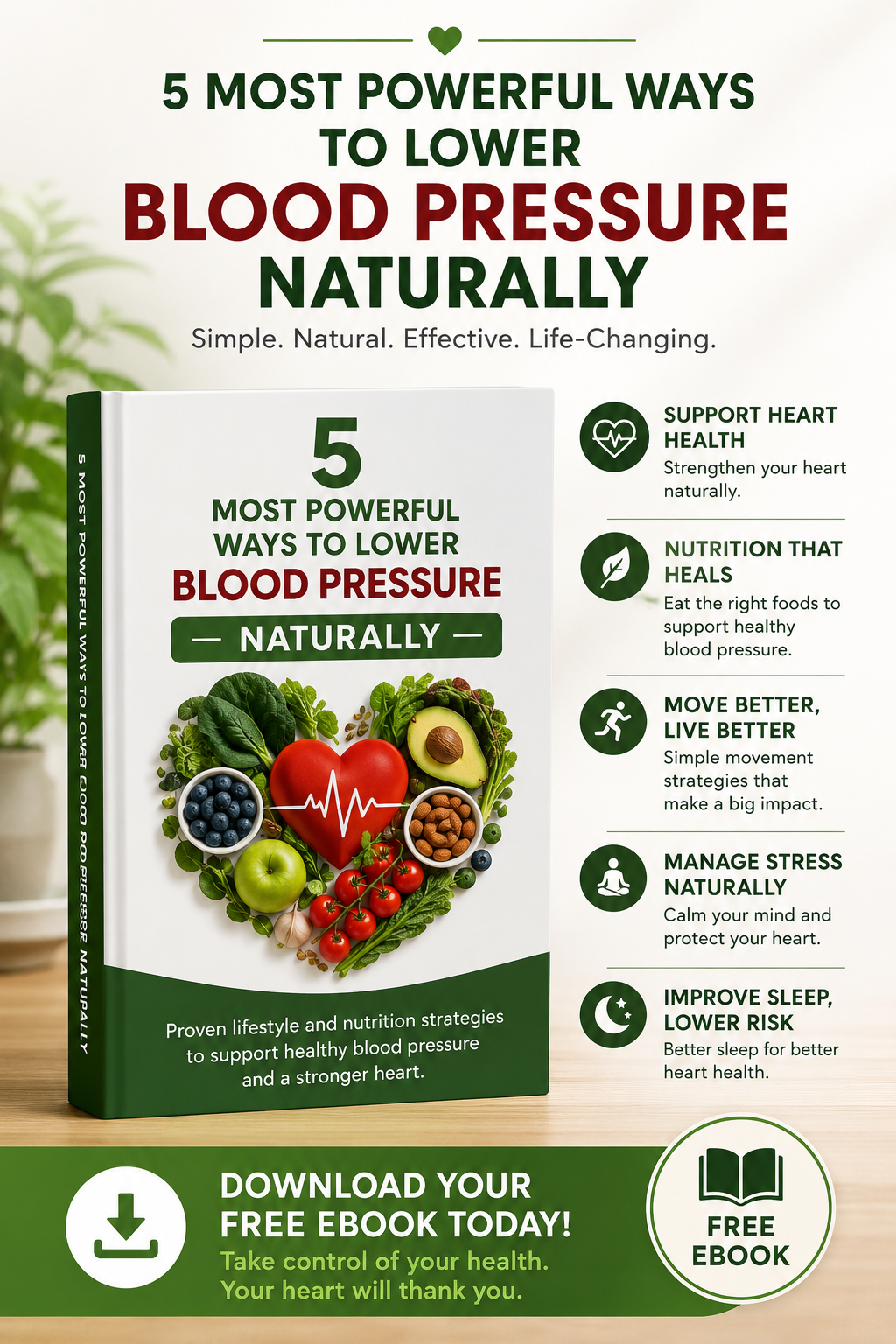
That is exactly why I created my free ebook:
5 Most Powerful Ways to Lower Blood Pressure Naturally
Inside, you’ll learn:
✔ The foods that silently raise blood pressure
✔ Why hypertension is often a dietary disease
✔ The most effective lifestyle changes for lowering blood pressure naturally
✔ What most people misunderstand about salt, weight gain, and processed food
✔ Simple daily strategies that support healing from the inside out
This guide is not about masking symptoms.
It is about helping you understand what your body has been trying to tell you before it is forced to scream.
If you are ready to stop merely controlling blood pressure…
and start addressing the cause…
Final Thoughts
Heart attacks and strokes remain among the leading causes of death in the modern world.
But much of this suffering is preventable.
The body has an extraordinary capacity to heal when the causes of disease are removed.
High blood pressure is not simply a “blood pressure problem.”
It is often a warning sign that the body is struggling under the weight of modern living.
This World Hypertension Day, let this be your reminder:
Do not wait for your body to scream before you begin listening.
Because prevention is always easier than recovery.
And true healing begins when we stop merely treating symptoms and start addressing causes.


0 comment
LEAVE A REPLY HERE
Your email address will not be published.