
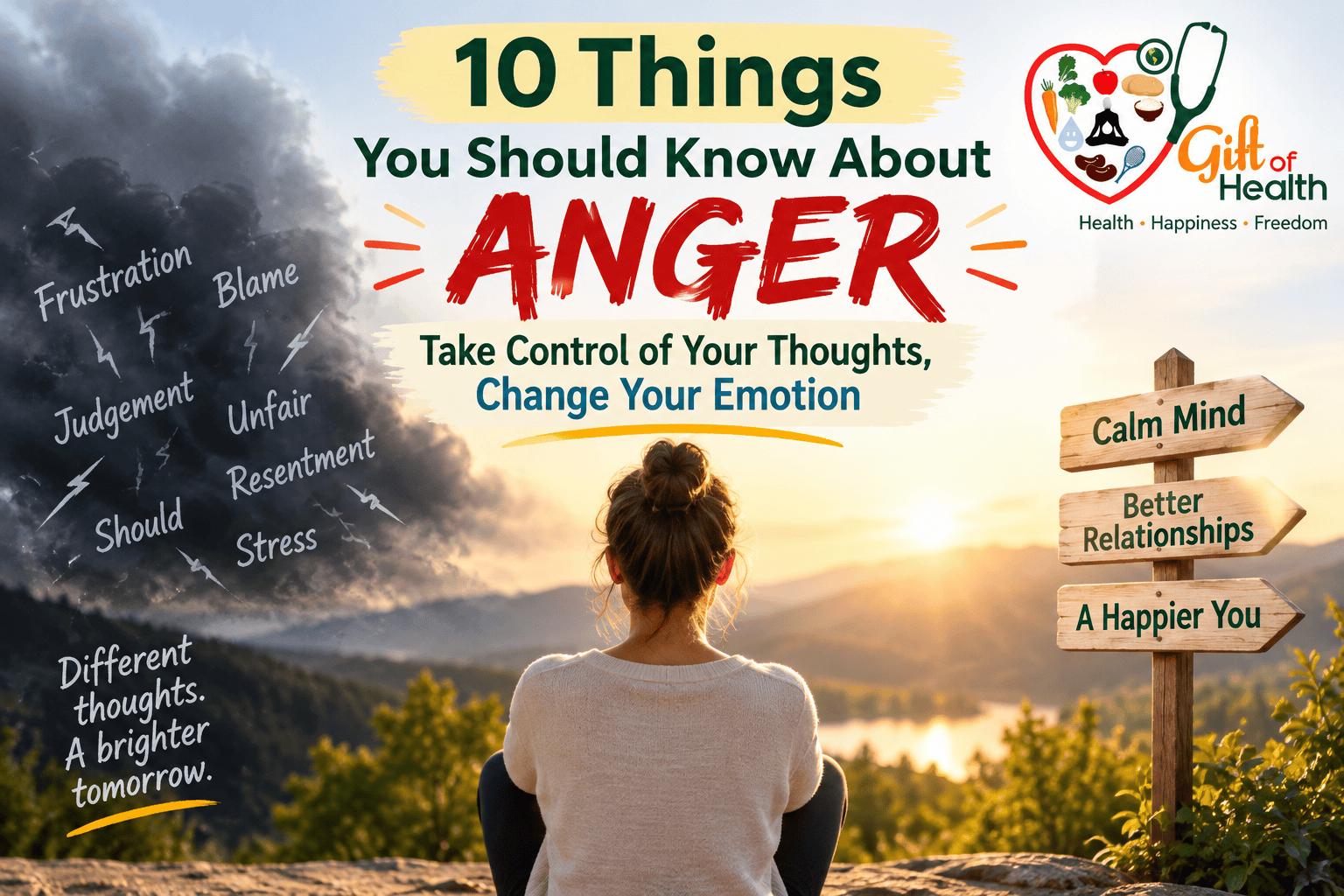
10 Things You Should Know About Your Anger
Anger Feels Powerful
It can make your voice louder.
It can make your heart race.
It can make you feel strong for a moment.
But it can also damage relationships, steal your peace, and leave you feeling empty.
What I learned from Dr. Steven Stosny’s workshops, Art of Living courses, and the book Feeling Good changed my life. The cognitive tools taught by both Dr. Stosny and Dr. David Burns helped me understand something difficult — but deeply freeing.
The Bitter Truth
No person and no event makes you angry.
Not now. Not ever.
You create every ounce of anger you feel.
That might sound harsh. But it’s actually good news. Because if you create it, you can change it.
Your feelings do not come from the event. They come from the meaning you give to the event.
Even if someone truly wrongs you, it may still not be in your best interest to feel angry. Sometimes the pain caused by outrage becomes far greater than the original insult.
10 Truths About Anger That Changed My Life
(Inspired by Feeling Good by David D. Burns)
1. Ask Yourself: “Who Is Making Me Angry?”
People? Events? Politics? Traffic?
No matter how outrageous others seem, they do not upset you directly. Your thoughts about them upset you.
When you see this clearly, you stop being a victim of the world. You become responsible — and responsibility gives you power.
Events don’t create anger.
Our interpretation of events creates anger.
Two people can face the same situation:
- One explodes.
- The other stays calm.
Why?
Because it’s not the event. It’s the meaning attached to it.
When you realize this, something amazing happens:
You stop being helpless. You gain choice.
2. Anger Usually Hurts You More Than It Helps
You may think anger protects you. But most of the time it:
- Freezes problem-solving
- Damages relationships
- Makes others defensive
- Keeps you emotionally stuck
The irony of anger is this:
It rarely changes other people. Instead of fixing problems, it often makes them worse.
Anger traps you in blame and bitterness.
Instead of asking:
“Why did this happen to me?”
Try asking:
“What can I do now?”
Even small action feels better than burning in resentment.
And if nothing can be changed, holding onto anger only hurts you.
Here’s another truth:
It’s almost impossible to feel deep joy and deep anger at the same time.
Which one would you rather hold onto?
3. Anger Often Comes From “This Is Unfair!”
Almost all anger grows from one belief:
- “This is unfair.”
- “This is unjust.”
- “They shouldn’t do this.”
But here’s something important:
There is no universal rulebook of fairness.
What feels fair to you may feel unfair to someone else.
When we confuse our personal preferences with moral law, anger intensifies.
You think they are wrong.
They think they are right.
Both people are operating from different value systems.
4. Angry Thoughts Are Often Distorted
When you’re angry, your thinking becomes extreme.
Common Cognitive Distortions
Labeling
You call someone:
- “selfish”
- “terrible”
- “a jerk”
But no human being is 100% bad.
Every person is a mixture of strengths and weaknesses.
Putting others down does not raise your self-esteem.
Only one person can truly damage your self-respect:
You.
Mental Filter & Overgeneralization
- “They ALWAYS do this.”
- “They NEVER care.”
You focus on one negative detail and ignore everything else.
That fuels anger.
Mind Reading
- “They did this on purpose.”
- “They’re trying to hurt me.”
But often, you are guessing.
And your guess may be wrong.
“Should” Statements
- “They shouldn’t act like that.”
- “People should think like I do.”
Other people have free will.
When we insist our expectations must always be met, we create self-defeating anger.
5. A Lot of Anger Protects a Hurt Ego
Sometimes anger is a shield.
Criticism, rejection, or disagreement can sting.
But here is a freeing truth:
No one can take away your self-esteem.
Only your own distorted thoughts can do that.
Blaming others for feelings of worthlessness only keeps you trapped.
6. Punishing People Rarely Works
You might think:
- “If I explode, they’ll finally understand.”
- “If I hurt them, they’ll change.”
But most people don’t believe they deserve punishment.
So they:
- Defend themselves
- Attack back
- Withdraw emotionally
Anger creates more anger.
Even if you “win” the moment, you often lose trust in the long run.
7. Frustration Comes From Unrealistic Expectations
We get angry when reality doesn’t match our expectations.
Examples:
- “If I work hard, I should succeed.”
- “If I’m nice, they should be nice back.”
- “If I love someone, they must love me the same way.”
- “I should be able to solve this quickly.”
Reality does not follow our personal rulebook.
We can influence outcomes, but we cannot control everything.
Sometimes adjusting expectations brings more peace than demanding control.
8. You Have the Right to Be Angry — But Is It Wise?
Yes, anger is allowed.
But ask yourself:
- Is this helping me?
- Is this improving the situation?
- Is this making my life better?
Not everything we have the right to feel is beneficial to hold onto.
9. The Price of Anger Is Often Too High
Short-Term “Benefits” of Anger
- It feels powerful
- It shows disapproval
- It proves you’re not weak
- It gives a sense of revenge
But the Costs Are Much Greater
- Relationships become strained
- People avoid or reject you
- Others retaliate
- Problems remain unsolved
- You feel guilty afterward
- You’re seen as moody or immature
- Your children may fear your reactions
- Your spouse may grow distant
- You feel miserable inside
Life becomes sour.
And you miss out on:
- joy
- creativity
- connection
- peace
When you honestly compare the cost and benefit, the cost is usually far greater.
10. You Don’t Need Anger to Be Strong
Many people believe that without anger they’ll become weak.
That’s not true.
Calm, assertive, rational communication is far more powerful than emotional explosions.
You influence people more effectively when you are steady, not reactive.
And you respect yourself more afterward.
What Can You Do in the Moment?
One powerful technique from Feeling Good:
Step 1: Develop the Desire to Change
Anger is one of the hardest emotions to give up.
So first ask yourself:
“Do I truly want to let this anger go?”
Step 2: Make a Double Column List
Column 1:
Advantages of staying angry
Column 2:
Disadvantages of staying angry
Be brutally honest.
Then ask yourself:
“Which is greater — the cost or the benefit?”
This exercise helps you see whether anger is truly serving you.
Step 3: List the Benefits of Letting Go
For example:
- People will enjoy being around me
- My family will feel safer with me
- I will feel calmer and more predictable
- I will feel emotionally stronger
- I will respect myself more
- Others will see me as mature and balanced
- I will influence people more effectively
- Calm discussion will help me get better results
- My spouse, children, and parents will trust me more
When you see these benefits clearly, motivation grows.
Final Thought
Anger is not your enemy.
Distorted thinking is.
When you gently question your thoughts, you weaken anger’s grip.
You stop being controlled by the outside world.
You begin living with intention instead of reaction.
And when chronic anger fades, something beautiful takes its place:
Peace.
Strength.
Joy.
Freedom.
Tags:
Search Blogs
